



Blog Technology: Caching Strategies to Keep Apps Responsive

Technology: Caching Strategies to Keep Apps Responsive

18 Jan 2026

Effective caching reduces database load and speeds responses, especially for dashboards and reports.
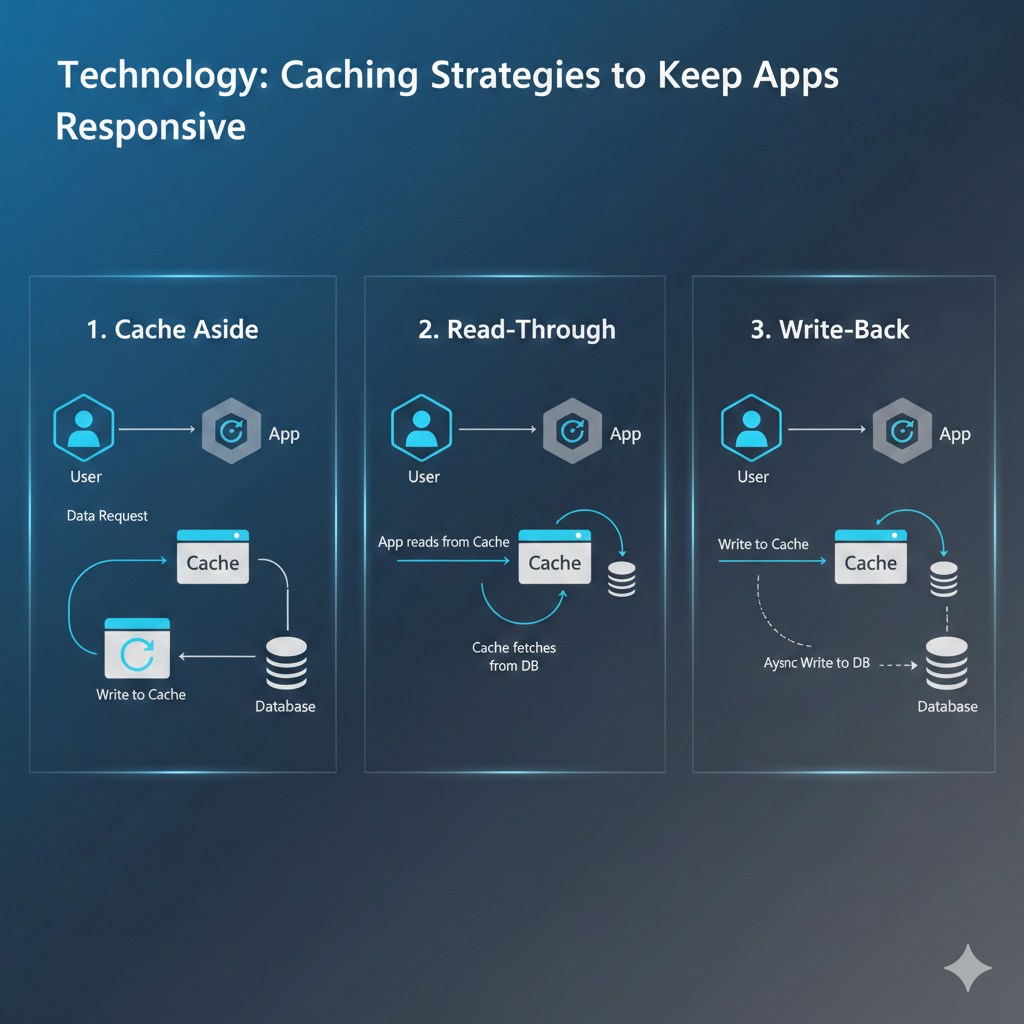
Technology: Caching Strategies to Keep Apps Responsive
Caching stores frequently accessed data or computed results so later requests return faster. Poor caching can cause stale data or hard-to-trace bugs, so strategy matters.

Best places to cache

  • Dashboards and reports accessed repeatedly.
  • Reference data that rarely changes (for example, unit and role lists).
  • Expensive aggregations (for example, monthly KPIs).

Common caching patterns

  • Read-through: read from cache first, fall back to database when missing.
  • Write-through: update cache when writing to the database.
  • Cache-aside: application explicitly manages cache invalidation.

Choosing a reasonable TTL

TTL depends on data characteristics. Reference data can use longer TTLs, while process status data may need short TTLs or invalidation on change. It is better to be slightly fresher than fast but wrong.

Metrics to monitor

  • Hit rate: how often cache is used versus database access.
  • Latency: response time before and after caching.
  • Staleness: how often users see out-of-date data.

Common mistakes

  • Not invalidating cache when data changes.
  • Inconsistent cache keys that overlap data.
  • Caching very dynamic data where invalidation is costlier than the benefit.
Good caching is a measured trade-off: fast but still correct and easy to operate.

Related posts

Keep reading

View all blogs