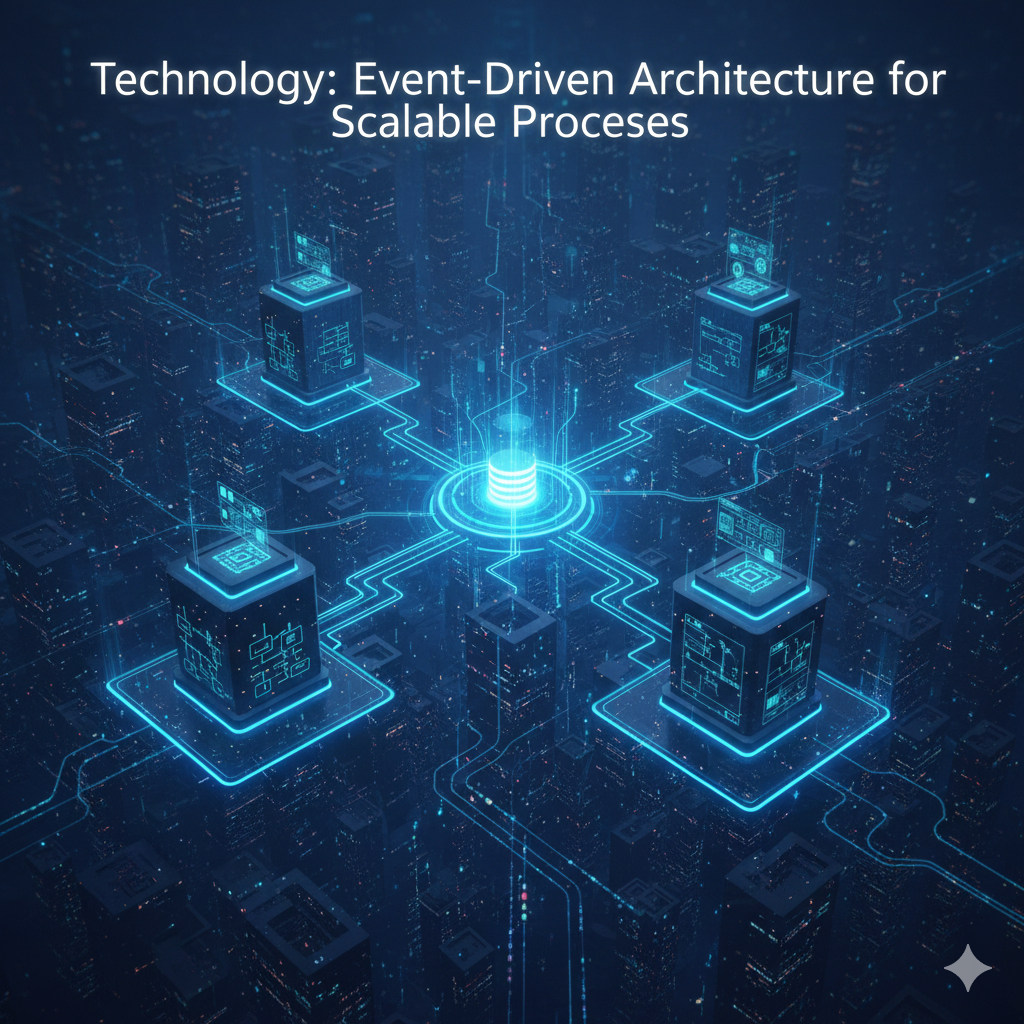
Event-driven architecture (EDA) publishes important state changes as events, and other services react to those events. It works well for long, multi-stage, and cross-system workflows.
Why event-driven improves scalability
- Decoupling: producers do not need to know their consumers.
- Asynchronous work: heavy processing can run in the background without blocking users.
- Extensible: add new consumers by subscribing to events without changing producers.
Common EDA components
- Event broker or message queue for distribution.
- Stable, documented event schemas.
- Idempotent consumers with retry strategy.
- Dead-letter queues for failed events.
Design decisions to make early
- Idempotency: repeated events must not corrupt data.
- Ordering: decide if event order must be preserved.
- Delivery semantics: at-least-once vs exactly-once and the trade-offs.
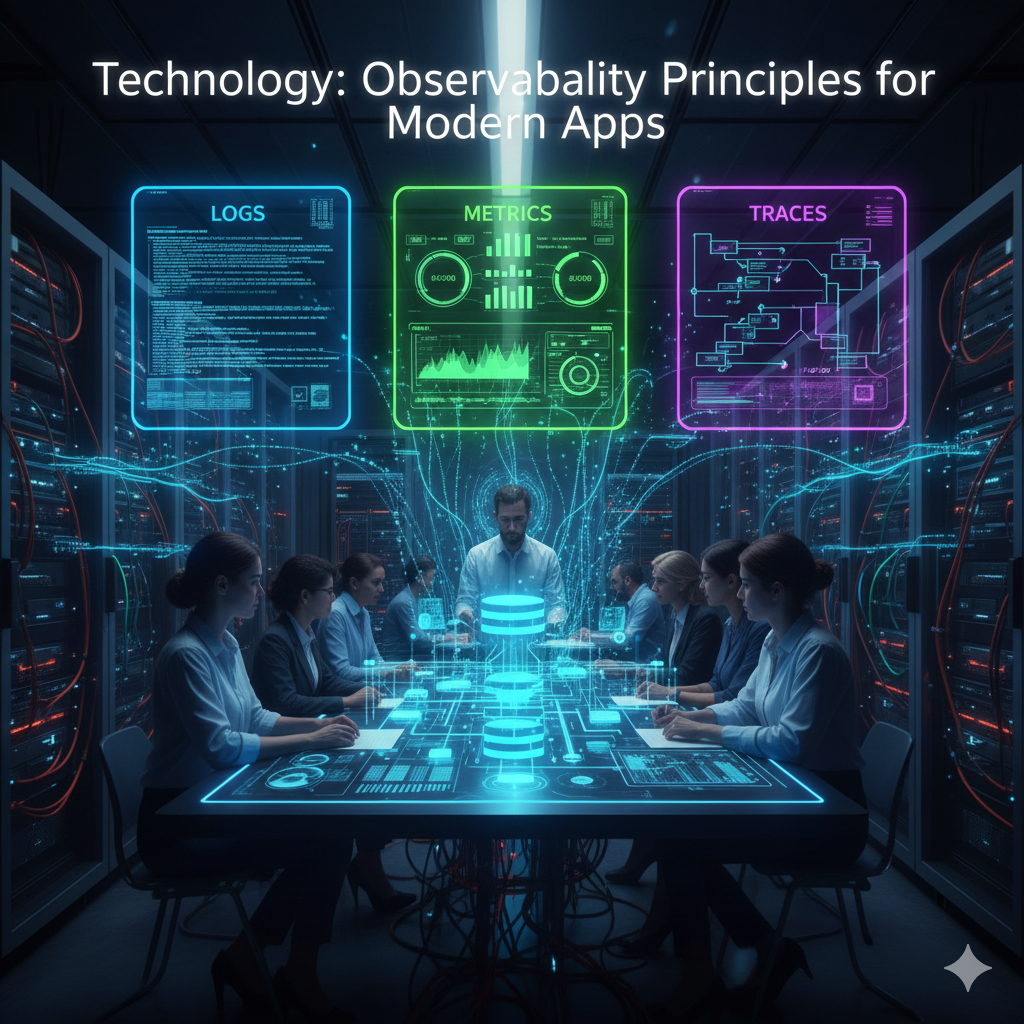
- Observability: trace events end-to-end from publish to completion.
When EDA is not a fit
If a process is simple and synchronous flow is enough, EDA can add unnecessary complexity. Use EDA when decoupling and async execution are clearly needed.
Gradual adoption
- Start with one important event (for example, RequestCreated).
- Build a simple consumer (for example, send notifications).
- Add monitoring and processing metrics.
- Expand use cases gradually.
With a clean design, EDA makes systems more resilient to spikes, easier to grow, and easier to audit through event trails.